1. Introduction
Event marketing has evolved from simply hosting conferences or trade shows into a full-scale growth strategy. Modern companies leverage events to:
Unlike traditional marketing, events allow personalized, experiential interactions that turn prospects into customers faster. In this guide, we will explore every stage of the event marketing process, from planning to ROI measurement, and provide actionable strategies you can implement today.
2. What is Event Marketing?
Event marketing is the strategic promotion and execution of events to achieve business objectives.
Types of Events
- Live in-person events - Conferences, workshops, trade shows
- Virtual events - Webinars, online summits, live streams
- Hybrid events - A combination of in-person and online
- Product launches and demos - Showcasing products to targeted audiences
- Networking & community-building events - Industry meetups or user groups
Key Benefits
Enhanced engagement
People interact directly with your brand
Lead generation
Capture data from attendees for follow-ups
Content creation
Recordings, blog posts, and social posts amplify reach
Brand authority
Position your company as an industry expert
Sales acceleration
Shortens the buyer journey via experiential learning
💡 Pro tip: Always align the type of event with your marketing objective for maximum ROI.
3. The Event Marketing Funnel
A strategic event marketing approach works best when integrated into a funnel model:
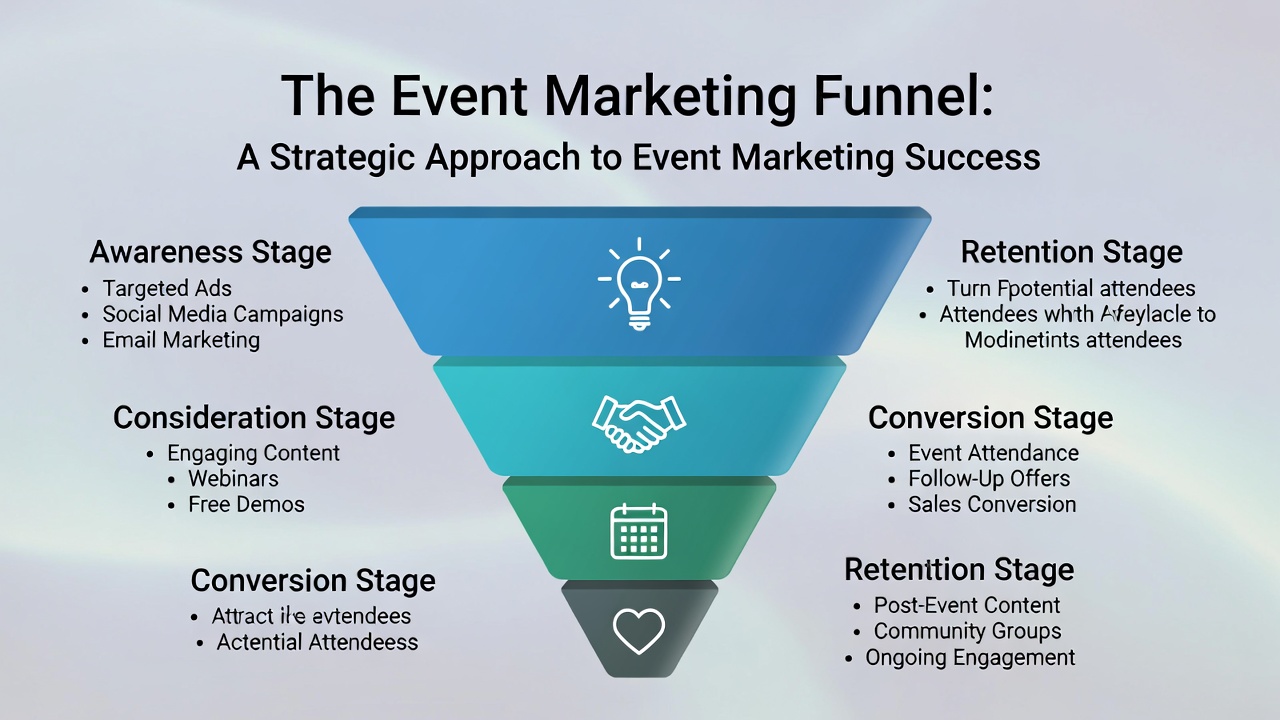
Awareness Stage
Ads, social media, and email campaigns attract prospects
Consideration Stage
Engagement via early content, webinars, or free demos
Conversion Stage
Event attendance → follow-up offers → sales conversion
Retention Stage
Post-event content, community groups, and ongoing engagement
4. Planning Your Event
Proper planning is non-negotiable for successful events.
Step 1: Define Your Objectives
Step 2: Identify Your Audience
- Segment by demographics, role, and intent
- Map messaging to each segment
- Consider both current customers and prospects
Step 3: Event Format & Timing
- Choose online, offline, or hybrid
- Decide on session length, dates, and timing
- Plan for time zones (if global audience)
Step 4: Content & Agenda
- Clear, value-driven agenda
- Balance between education, engagement, and promotion
- Include Q&A, breakout sessions, and interactive polls
Step 5: Budget & Resources
- Venue, equipment, software licenses
- Staff, speakers, and facilitators
- Marketing and promotion budget
💡 Tip: Always add a buffer of 10-20% for unexpected expenses.
5. Promoting Your Event
Promotion is key to attendance and ROI.
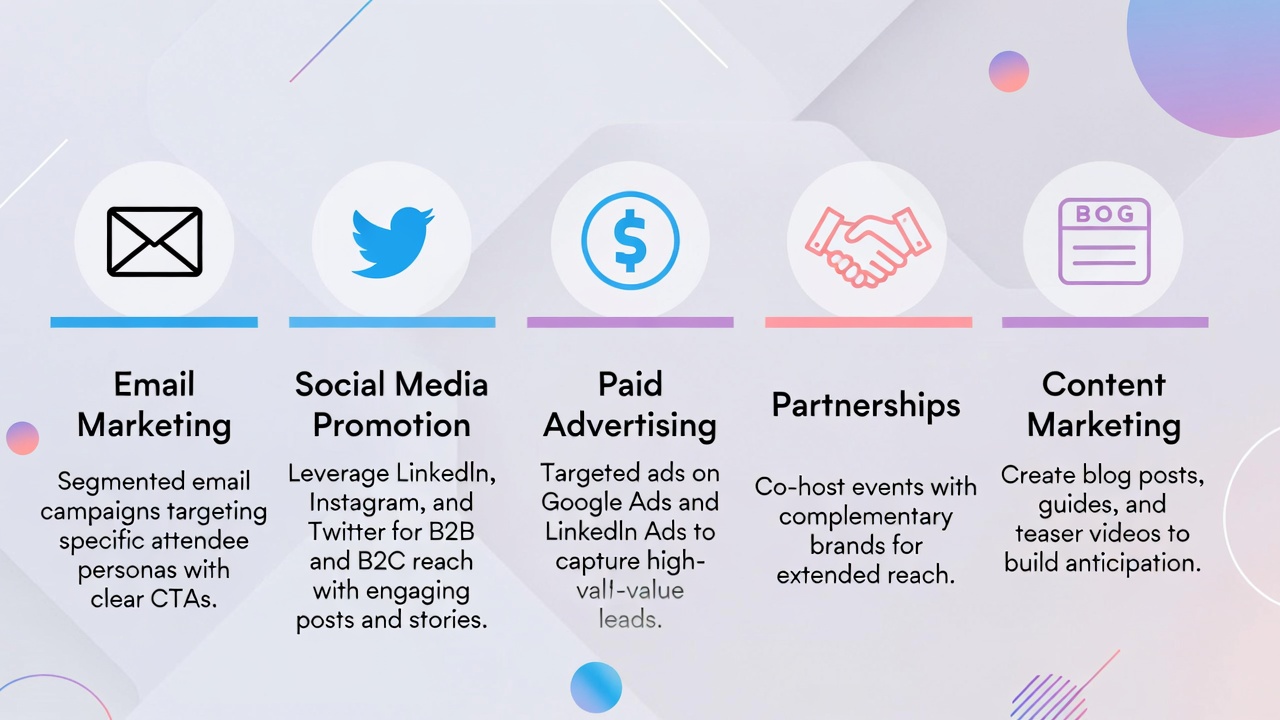
Channels
Email Marketing
Segmented campaigns with personalized CTAs
Social Media
LinkedIn for B2B, Instagram/Twitter for B2C
Paid Ads
Retargeting campaigns on Google, Meta, LinkedIn
Partnerships
Co-host with complementary brands to expand reach
Content Marketing
Blog posts, guest posts, and teaser videos
Tips for Effective Promotion
- Start promotion 6-8 weeks in advance
- Use countdown timers and early-bird incentives
- Highlight key benefits of attending (learning, networking, access)
- Track clicks, registrations, and conversions using UTM parameters
6. Engaging Attendees During the Event
Engagement is critical for perceived value and ROI.
Interactive content
Polls, Q&A sessions, live chat
Gamification
Quizzes, challenges, prizes
Storytelling
Case studies, testimonials, and success stories
High-quality speakers
Industry experts build credibility
Networking opportunities
Breakout rooms, virtual lounges
🎯 Remember: Attendees should leave feeling educated, inspired, and connected.
7. Post-Event Follow-Up and Nurturing
The post-event phase is where revenue is realized.
- Thank you emails with recordings and resources
- Segment attendees based on engagement level
- Lead scoring for sales follow-up
- Content repurposing: Blog posts, infographics, video snippets
- Feedback surveys to improve future events
⚡ Pro tip: Send follow-ups within 24-48 hours while excitement is high.
8. Measuring Event Marketing ROI
ROI Formula
ROI = Revenue Generated ÷ Total Event Cost × 100
Other metrics to track:
Tools like HubSpot, Salesforce, and Google Analytics make tracking much easier.
9. Tools, Platforms, and Automation
CRM
Salesforce, HubSpot
Event Platforms
Zoom, Hopin, Demio, Webex
Marketing Automation
ActiveCampaign, Mailchimp
Analytics
Google Analytics, Heap, custom dashboards
Design & Assets
Canva, Figma, Adobe Creative Suite
🔧 Automation saves time, improves tracking, and ensures consistency across all touchpoints.
10. Case Studies & Examples
Example 1: MyWebGlory + Kornit Digital
Goal: Generate qualified registrations
Method: Multi-channel campaign + webinar series
Result: 1,208 registrations in 8 weeks, 65% attendance, pipeline growth +30%
Example 2: B2B SaaS Summit
Goal: Position brand as thought leader
Method: 3-day virtual summit, partnership with industry associations
Result: 2,500 attendees, 45 backlinks generated, press coverage
Real-life case studies increase credibility and help generate backlinks naturally.
11. Common Event Marketing Mistakes
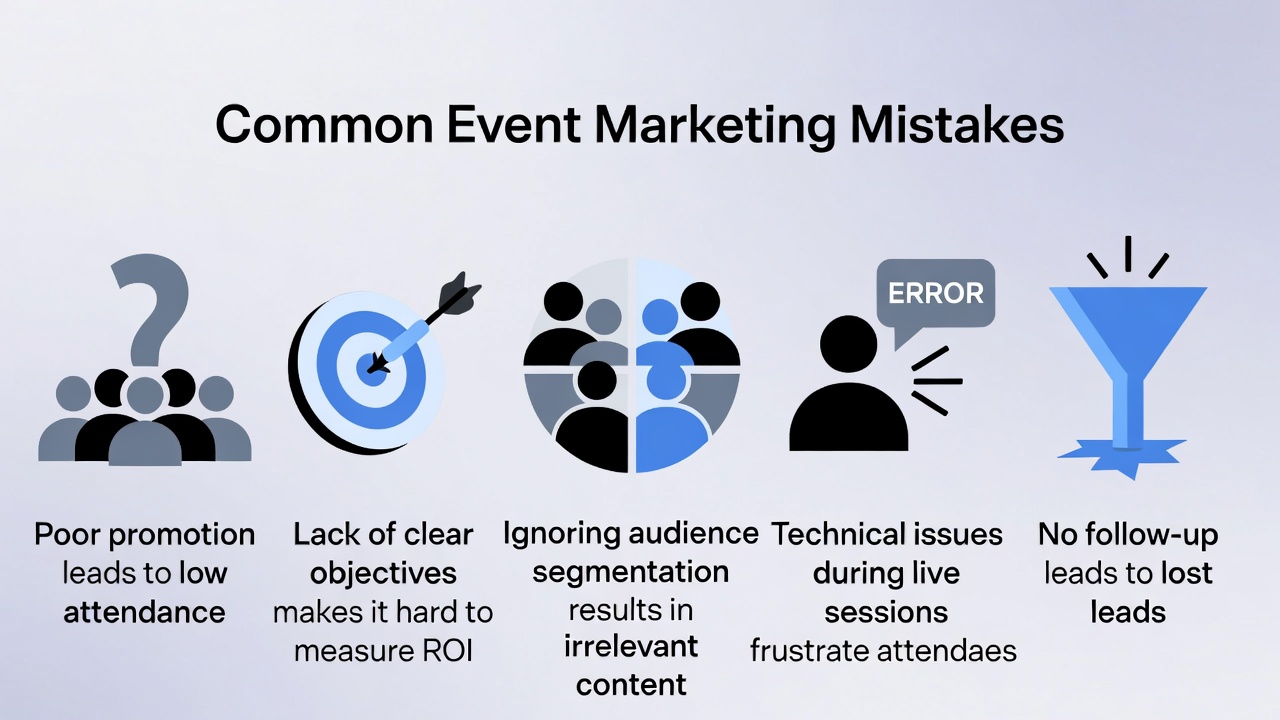
⚠️ Warning: Avoiding these mistakes improves both ROI and reputation.
12. Advanced Strategies for Authority & Growth
Content repurposing
Turn each event into multiple blogs, videos, and infographics
SEO integration
Optimize event pages and post-event content for keywords
Influencer & partner co-marketing
Extend reach and credibility
Recurring events
Build community and long-term brand authority
Data-driven optimization
A/B test formats, timing, and messaging
🚀 Authority grows when your events consistently deliver value and visibility.
13. Conclusion
Event marketing is a strategic, measurable, and revenue-driven approach. Done correctly, it generates leads, builds authority, and strengthens your brand's market position.
Start small, measure, optimize, and scale. With each event, your expertise and credibility compound, creating long-term growth.