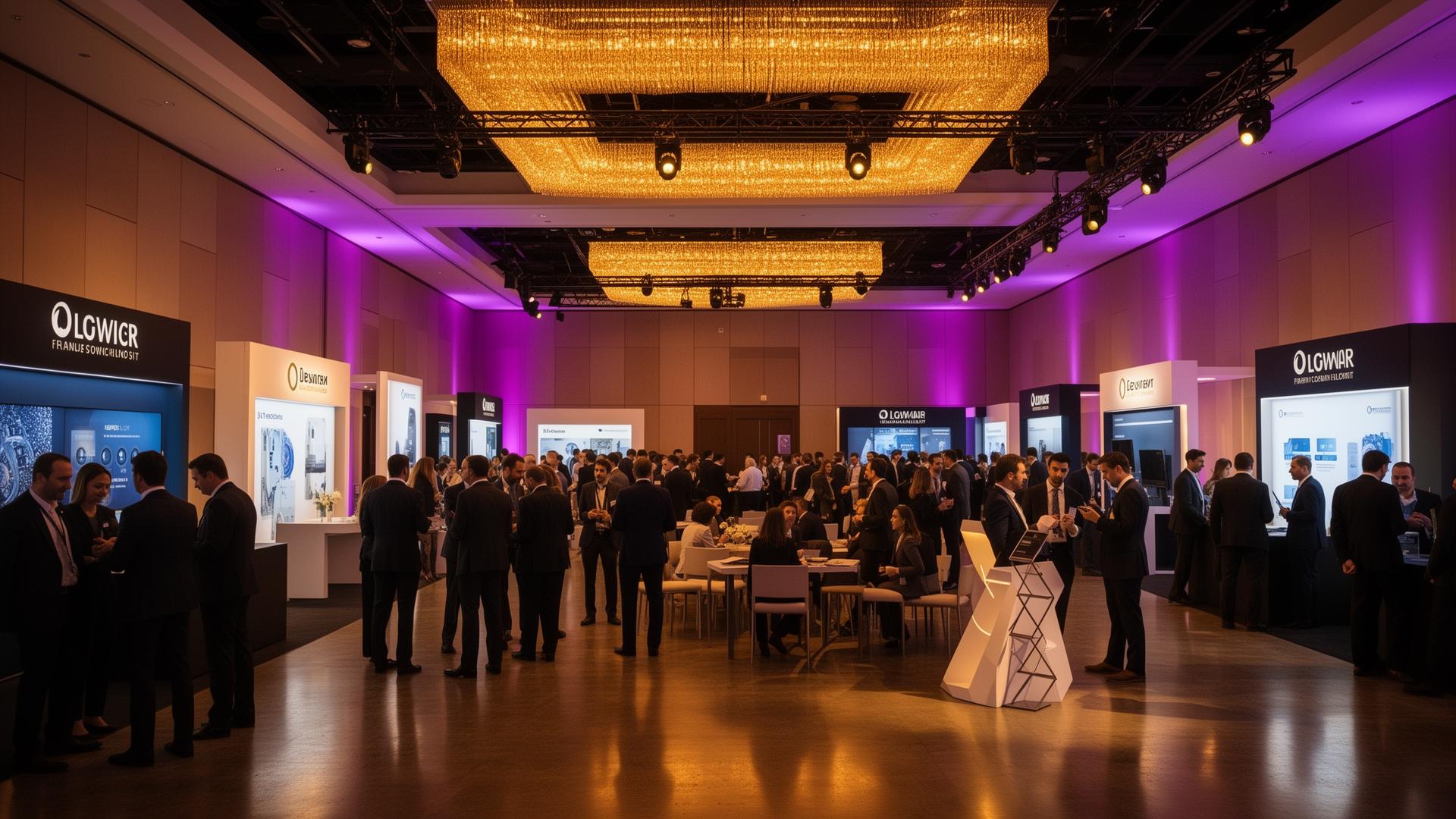
Trade shows and conferences represent one of the largest investments in most B2B marketing budgets. Between booth costs, travel expenses, marketing materials, and staff time, a single major trade show can easily cost $50,000 to $200,000 or more. Yet despite these significant investments, many companies struggle to measure, let alone maximize, their return on investment.
The difference between companies that achieve exceptional trade show ROI and those that see their investment disappear into the ether comes down to three critical phases: strategic pre-event planning, intentional on-site execution, and systematic post-event follow-up. Miss any one of these, and your ROI suffers dramatically.
In this comprehensive guide, we'll walk through every aspect of maximizing your trade show and conference ROI, from the moment you decide to exhibit to months after the event concludes. Whether you're a seasoned trade show veteran or planning your first major exhibition, these proven strategies will help you transform your trade show presence from a cost center into a revenue-generating powerhouse.
1. Why Trade Shows Still Matter in the Digital Age
In an era of digital marketing dominance, some question whether trade shows remain relevant. The data tells a compelling story: face-to-face interactions at trade shows create connections that digital channels simply cannot replicate.
The Unique Value of Trade Shows
- Concentrated access to decision-makers who are actively seeking solutions
- Opportunity for live product demonstrations and hands-on experiences
- Competitive intelligence gathering in a single location
- Brand visibility among industry peers and media
- Relationship building that accelerates the sales cycle
- Content creation opportunities (interviews, testimonials, live coverage)
Research consistently shows that 81% of trade show attendees have buying authority, and 77% of executive decision-makers found at least one new supplier at the last trade show they attended. These aren't casual browsers, they're motivated buyers actively looking for solutions.
📊 Key Statistic: Companies report that trade show leads cost 62% less to close than leads generated through other channels, primarily because prospects have already engaged with your product in person.
2. Pre-Event Planning: Setting the Foundation for Success
The work that happens before the trade show often determines 80% of your results. Companies that treat trade shows as "show up and see what happens" events consistently underperform those with strategic pre-event planning.
Define Clear, Measurable Goals
Before committing to any trade show, establish specific objectives that align with your business goals. Vague goals like "generate leads" aren't sufficient. Instead, define:
- • Specific number of qualified leads to capture (e.g., 150 Marketing Qualified Leads)
- • Target number of scheduled meetings with decision-makers
- • Pipeline value to generate (e.g., $500,000 in new opportunities)
- • Brand awareness metrics (booth visits, social mentions, press coverage)
- • Customer retention activities (meetings with existing customers)
Pre-Event Outreach Campaign
The most successful exhibitors don't wait for attendees to find their booth. They actively reach out before the event to schedule appointments and drive traffic:
- • Obtain the attendee list 4-6 weeks before the event
- • Segment attendees by industry, role, and fit with your ICP
- • Launch personalized email sequences to schedule booth meetings
- • Use LinkedIn outreach to connect with high-value targets
- • Create event-specific landing pages with appointment scheduling
- • Offer exclusive incentives for pre-scheduled meetings
Coordinate Cross-Functional Teams
Trade show success requires alignment across marketing, sales, product, and executive teams:
- • Assign clear roles and responsibilities for each team member
- • Schedule pre-event training sessions on messaging and demos
- • Create a unified lead qualification framework
- • Establish communication protocols during the event
- • Define handoff processes between booth staff and sales team
3. Booth Strategy & Design
Your booth is your storefront at the trade show. It needs to attract attention, communicate your value proposition instantly, and facilitate meaningful conversations. This doesn't necessarily mean the biggest or most expensive booth, it means the most strategically designed one.
Essential Booth Elements
Clear Value Proposition
Visitors should understand what you do within 3 seconds
Interactive Elements
Product demos, touchscreens, or experiences that engage visitors
Conversation Areas
Semi-private spaces for deeper discussions with qualified prospects
Lead Capture Stations
Efficient systems for capturing and qualifying visitor information
Visual Differentiation
Design elements that stand out from surrounding booths
Comfortable Flow
Layout that encourages entry and discourages crowding
Pro Tip: Invest in booth location strategically. High-traffic areas near entrances, food courts, or major attractions often justify the premium price through increased visibility and foot traffic.
4. Staff Training & Preparation
Your booth staff are the human face of your brand. Even the most impressive booth fails without well-trained, energetic staff who can engage visitors effectively and qualify leads efficiently.
Pre-Show Training Essentials
- Elevator pitch mastery: Every team member should deliver a compelling 30-second pitch
- Product demonstration proficiency: Hands-on practice with all demo scenarios
- Qualification framework: Clear criteria for identifying high-value prospects
- Objection handling: Prepared responses to common questions and concerns
- Competitor awareness: Knowledge of competitive landscape and differentiation points
- Lead capture process: Efficient use of lead capture tools and note-taking protocols
Booth Etiquette Guidelines
Small behaviors make a big difference in how visitors perceive your brand:
- • Never sit in the booth, standing shows energy and accessibility
- • Avoid phone use and side conversations that signal unavailability
- • Make eye contact and greet every person who approaches
- • Ask open-ended questions rather than "Can I help you?"
- • Rotate staff to maintain energy throughout long show days
- • Have a system for gracefully ending conversations with non-qualified visitors
5. Maximizing Event Days
The show floor is where preparation meets execution. Every interaction is an opportunity, and the pace is relentless. Success requires disciplined execution of your pre-planned strategies while remaining adaptable to opportunities that arise.
Daily Execution Rhythm
Morning Huddle (30 min before show opens)
Review scheduled meetings, assign roles, share learnings from previous day, set daily goals
Midday Check-In
Quick sync on lead volume, hot prospects requiring immediate attention, staff rotation
End-of-Day Debrief
Review all leads captured, prioritize hot leads for immediate follow-up, identify next-day improvements
Beyond the Booth
The exhibit hall is just one venue for engagement. Maximize your presence by activating across the entire event:
- • Attend networking events and receptions with a strategic target list
- • If speaking, leverage your session to drive booth traffic
- • Monitor event hashtags and engage on social media in real-time
- • Schedule coffee meetings with key prospects outside the exhibit hall
- • Attend competitor sessions to gather intelligence
- • Connect with media and analysts who are covering the event
💡 Power Move: Send same-day follow-up emails to hot leads while you're still at the event. A personalized message sent hours after your conversation has 3x higher open rates than one sent the following week.
6. Lead Capture Systems
The quality of your lead capture directly impacts your post-event ROI. A pile of badge scans with no context is nearly worthless. Your goal is to capture not just contact information, but the insights needed for effective, personalized follow-up.
Essential Lead Data to Capture
Contact Information
Name, title, company, email, phone (via badge scan or form)
Qualification Status
Hot, warm, or cold based on defined criteria
Pain Points Discussed
Specific challenges they mentioned in conversation
Products of Interest
Which solutions or features they showed interest in
Timeline & Budget
Any indicators of purchase timeframe or budget
Next Steps Agreed
What you committed to do and when
Lead Scoring Framework
Implement a simple scoring system that your entire team can apply consistently:
7. Post-Event Follow-Up: Where ROI Is Won or Lost
This is where most companies drop the ball. They invest heavily in the event itself, then let leads grow cold through slow or generic follow-up. Studies show that 80% of trade show leads never receive any follow-up at all. Don't let your investment walk out the door.
Critical Timeline: Leads contacted within 24 hours are 7x more likely to enter the sales pipeline than those contacted after a week. Speed is everything.
Day 1 (Same Day or Next Morning)
- • Sales team reviews and claims hot leads
- • Send personalized emails to all hot leads referencing your conversation
- • Schedule follow-up calls for hot leads
- • Begin LinkedIn connection requests with personalized notes
Days 2-3
- • First round of phone follow-ups with hot leads
- • Send personalized emails to warm leads
- • Add all leads to appropriate nurture sequences in your CRM
- • Share relevant content based on discussed pain points
Week 1
- • Complete follow-up calls to all warm leads
- • Send general thank-you email to cool leads with nurture content
- • Book demos and meetings from hot lead conversations
- • Begin internal debrief process
Weeks 2-4
- • Execute multi-touch nurture sequences for warm and cool leads
- • Re-engage non-responders with value-add content
- • Track pipeline progression and attribute to trade show
- • Complete comprehensive event performance analysis
8. Measuring & Reporting ROI
Accurate ROI measurement is essential for justifying future trade show investments and optimizing your approach. The challenge is that trade show ROI often takes months to fully materialize as leads progress through the sales cycle.
Key Metrics to Track
Cost Per Lead
Total event cost ÷ number of qualified leads captured
Cost Per Meeting
Total event cost ÷ number of meetings booked
Pipeline Generated
Total value of opportunities created from event leads
Revenue Attributed
Closed-won revenue from event-sourced leads
Lead-to-Opportunity Rate
Percentage of leads that became sales opportunities
Opportunity-to-Close Rate
Percentage of opportunities that closed
Calculating True ROI
Use this formula for a comprehensive ROI calculation:
ROI = (Revenue Generated - Total Event Cost) / Total Event Cost × 100
Remember to include all costs: booth space, design and construction, travel and accommodation, marketing materials, staff time, technology, and giveaways.
📈 Benchmark: Top-performing B2B companies achieve trade show ROI of 5:1 or higher. If you're below 3:1, there's significant room for optimization in your approach.
9. Common Mistakes That Kill Trade Show ROI
Even experienced exhibitors make mistakes that significantly impact their results. Here are the most common pitfalls and how to avoid them:
No Pre-Event Outreach
Impact: Relying entirely on walk-by traffic means missing high-value targets
Solution: Build a target list and schedule meetings before the event
Untrained Booth Staff
Impact: Poor conversations lead to unqualified leads and missed opportunities
Solution: Invest in pre-show training on messaging, demos, and qualification
Badge Scanning Without Notes
Impact: No context for follow-up means generic, ineffective outreach
Solution: Require conversation notes for every lead captured
Delayed Follow-Up
Impact: Leads go cold and forget your conversation within days
Solution: Have a same-day follow-up process ready before the event
No Clear Goals or KPIs
Impact: Impossible to measure success or identify improvements
Solution: Define specific, measurable objectives before committing
Overinvesting in Booth, Underinvesting in People
Impact: Impressive booth but poor conversations don't generate pipeline
Solution: Balance booth design with staff training and follow-up systems
10. Frequently Asked Questions
11. Conclusion: Turning Trade Shows Into Revenue Engines
Trade shows and conferences represent a unique opportunity in B2B marketing, the chance to meet motivated buyers face-to-face, demonstrate your value in real-time, and build relationships that accelerate the sales cycle. But this opportunity comes with significant investment, making strategic execution essential.
The companies that achieve exceptional trade show ROI don't leave success to chance. They approach each event with clear objectives, thorough preparation, disciplined execution, and systematic follow-up. They invest as much in their people and processes as they do in their booth. And they measure everything, using data to continuously improve their approach.
Start implementing these strategies at your next trade show. Focus first on the highest-impact areas: pre-event outreach to schedule meetings, staff training on qualification and engagement, and same-day follow-up for hot leads. These three changes alone can transform your results.
The trade show floor is filled with opportunity. With the right strategy, you can capture it.